

Short answer: Spend 3 nights each in Cairo, Luxor and Aswan, with day 10 flexible. Fly Cairo to Luxor (about 1 hour), travel Luxor to Aswan by road, train or river (about 220 km), then fly Aswan to Cairo with EgyptAir. Use day 10 for Alexandria, the Red Sea or your flight home.
Key facts
- Nights
- 3 Cairo, 3 Luxor, 3 Aswan, with day 10 flexible
- Cairo to Luxor flight
- About 1 hour, direct (Wikivoyage)
- Luxor to Aswan
- About 220 km; the train takes 3 to 4 hours (Wikipedia, Wikivoyage)
- Aswan to Cairo flight
- EgyptAir flies the route (Wikivoyage)
- Abu Simbel
- Around 300 km south of Aswan, open 6:00 to 17:00 (Ministry)
- Cairo to Alexandria by Talgo train
- About 2 hours 30 minutes, 208 km (Seat61)
What does the 10-day route look like at a glance?
This route links the Pyramids, the Nile Valley temples and Aswan with two domestic flights and one road day. Opening hours below come from the Ministry of Tourism and Antiquities, or from the Grand Egyptian Museum ticketing page, checked on 28 October 2026.
- Day 1: arrive in Cairo.
- Day 2: Giza Plateau and the Grand Egyptian Museum.
- Day 3: Saqqara and Coptic or Islamic Cairo.
- Day 4: fly to Luxor, Luxor Temple in the evening.
- Day 5: west bank in the morning, Karnak in the afternoon.
- Day 6: drive to Aswan via Edfu and Kom Ombo.
- Day 7: Philae and Aswan.
- Day 8: Abu Simbel, or a slow day in Aswan.
- Day 9: fly to Cairo.
- Day 10: Alexandria, the Red Sea or home.
If you only have a week, use our 7 days in Egypt itinerary instead. Hours change around Ramadan and holidays, so recheck them before you book.
Related tripsEgypt tour packages63 private trips from 2 to 15 days.Days 1 to 3: how do you spend them in Cairo?
Keep day 1 for arrival and rest. Day 2 is Giza: the plateau opens at 8:00 and closes at 16:00 (Ministry), and the Grand Egyptian Museum fits in after lunch. Pick a Wednesday or Saturday for it if you can, because the galleries then stay open until 21:00. Book the museum ahead, and read our Grand Egyptian Museum visitor guide first.
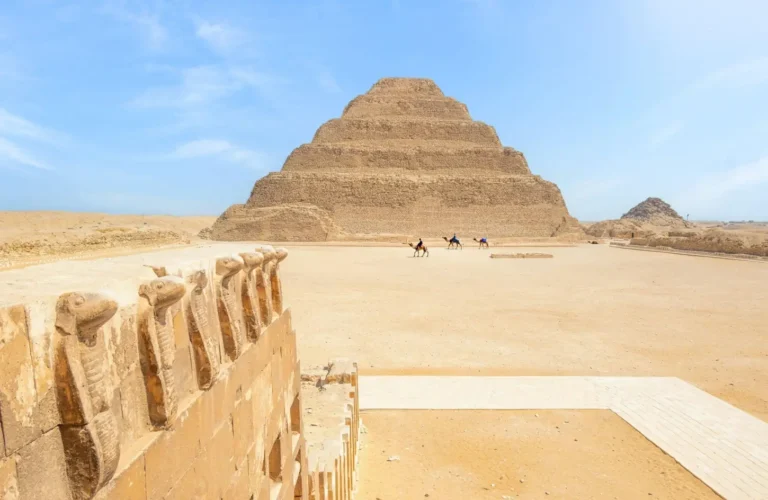
Day 3 goes to Saqqara, about 40 km southwest of Cairo and open 8:00 to 16:00, followed by Coptic or Islamic Cairo in the afternoon. Our 3 days in Cairo plan gives the hours and order for each stop.
Day 4: how do you get from Cairo to Luxor?
Fly, or take the night train. Wikivoyage puts the direct flight at about 1 hour, and says flights run frequently. Seat61 lists a daily sleeper that leaves Cairo at 19:45 and reaches Luxor at 06:10 (check the current timetable), which turns a travel day into a night.
After check-in, go to Luxor Temple. The Ministry lists it open 6:00 to 20:00, so an evening visit works well.
Day 5: what do you do on the Luxor west bank and at Karnak?
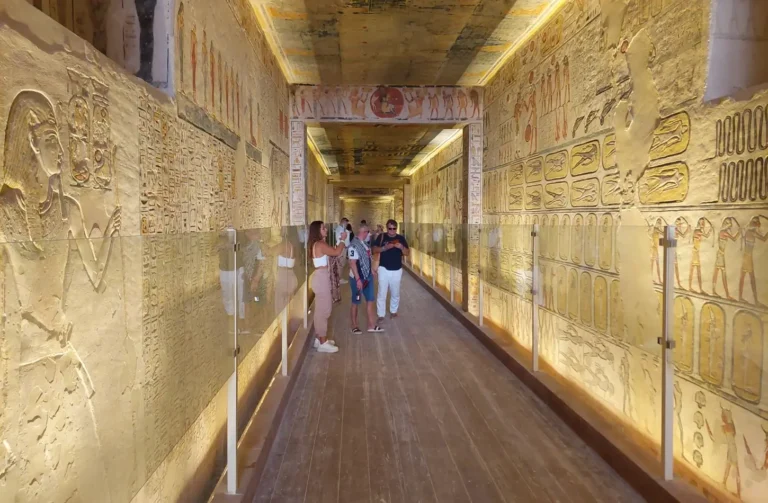
Start the west bank at 6:00. The Valley of the Kings and Hatshepsut’s temple are both listed open 6:00 to 17:00. The Ministry says the Valley holds the tombs of New Kingdom rulers from the Eighteenth to Twentieth Dynasties, and that Hatshepsut built her temple at Deir al-Bahari around 1473 to 1458 BC.
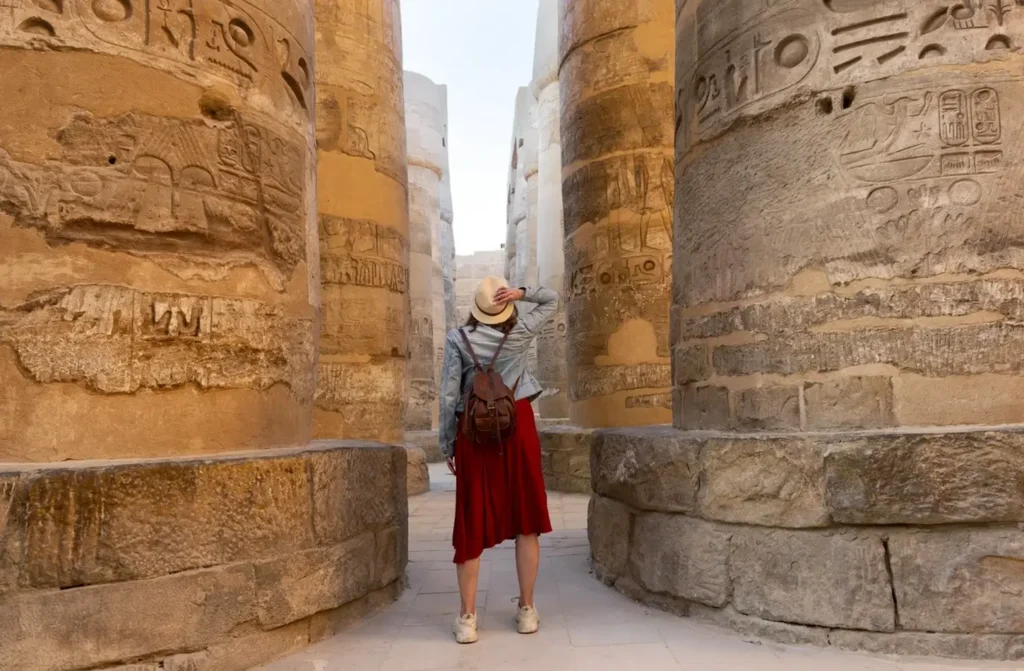
Visit Karnak in the late afternoon, since it is also open 6:00 to 17:00. If you want a sunrise balloon flight, it fits before the west bank, but flights are weather-dependent, so keep day 5 flexible. Our Luxor balloon guide has the details.
Day 6: how do you travel from Luxor to Aswan?
Wikipedia puts Luxor about 220 km north of Aswan, and Wikivoyage gives the train as 3 to 4 hours. Add Edfu and Kom Ombo and it becomes a full day. The Ministry lists Edfu as open 6:00 or 7:00 to 17:00, depending on the day, and Kom Ombo 7:00 to 21:00. Edfu was begun under Ptolemy III in 237 BC and completed in 57 BC.
A Nile cruise covers the same stretch by river, with the temples as shore stops. Our 10 days Egypt classic with Nile cruise and Abu Simbel package does it that way.
Day 7: what is there to see in Aswan?
Take a boat to Philae. The Ministry lists Philae as open 7:00 to 16:00 and says its monuments were moved to Agilkia Island during the UNESCO Nubia Campaign of the 1960s, after the Aswan High Dam flooded the original island. The Ministry’s Aswan page also names Elephantine Island, the granite quarries with the Unfinished Obelisk, the monastery of St Simeon and the Nubian Museum.
The Nubian Museum was founded after the UNESCO salvage campaign of the Nubian monuments launched in 1960, per the Ministry. It makes a calm afternoon after the temple.
Day 8: is Abu Simbel worth the early start?
For most travellers, yes, if the heat allows. The Ministry puts Abu Simbel around 300 km south of Aswan and lists it open 6:00 to 17:00. Ramesses II cut the Great Temple into rock around 1264 BC, and both temples were moved in 1968 after the High Dam threatened to submerge them.
Wikivoyage lists three ways to go: an organised minibus in a police convoy, often leaving around 4:00 in the morning, a private car, or an EgyptAir flight from Aswan. If you do not want a 4:00 start, spend day 8 in Aswan instead.
Day 9 and day 10: what are your options?
Fly Aswan to Cairo on day 9. EgyptAir serves the route, so check the current schedule when you book. For day 10, choose one of the three options in the table.
| Option | What it involves | Check before you commit |
|---|---|---|
| Go home | Fly out of Cairo | Allow extra time for your international check-in |
| Alexandria | 208 km by Talgo train, about 2 hours 30 minutes each way (Seat61) | Foreigners usually book through agencies, as our Alexandria guide explains |
| Red Sea | Hurghada is about 455 km from Cairo by road (Wikipedia) | We did not verify flight times, so ask for current schedules |
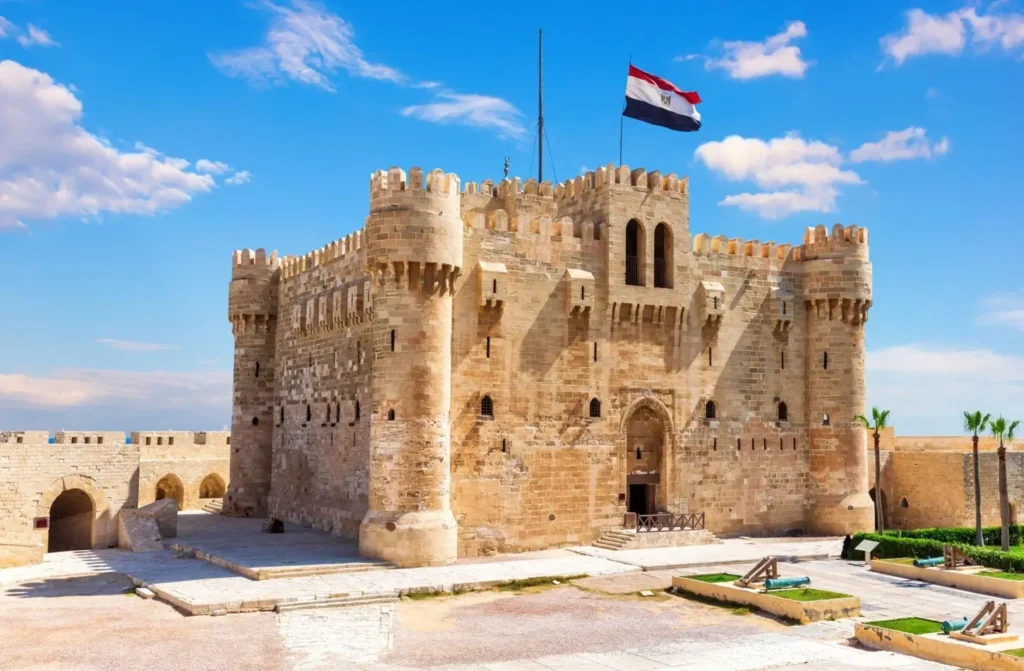
Leave early and you have most of a day for the Qaitbay Citadel, the Bibliotheca Alexandrina and the catacombs, which works if your flight home leaves the next day.
Which extra stops fit if you have spare hours?
Several stops slot into a free morning without changing the route. In Cairo, the Egyptian Museum in Tahrir is open daily from 9:00 to 17:00, with the last ticket at 16:00. The Ministry says it was inaugurated in 1902 and holds the burials of Yuya and Thuya and the Narmer Palette. The Citadel is open 8:00 to 17:00. Saladin ordered it in 1176, and al-Kamel completed it in 1207.
In Luxor, Medinet Habu is open 6:00 to 17:00. The Ministry credits Ramesses III with building the mortuary temple, and lists reliefs of the Sea Peoples battles and a canal that once linked it to the Nile. In Aswan, the Unfinished Obelisk is open 7:00 to 16:00. Had it been completed, it would have weighed 1,168 tonnes and stood about 42 metres tall, per the Ministry.
What are the opening hours of the optional stops?
The table gives the hours listed by the Ministry of Tourism and Antiquities on 29 October 2026. Ramadan hours are shorter at the museums, so recheck them for your dates.
| Stop | City | Listed hours | What the Ministry says |
|---|---|---|---|
| Egyptian Museum | Cairo | 9:00 to 17:00, last ticket 16:00 | Open since 1902; Ramadan 9:00 to 16:00 |
| Citadel of Saladin | Cairo | 8:00 to 17:00 | Mosque of Muhammad Ali, three museums |
| Mosque of Ibn Tulun | Cairo | 9:00 to 17:00 | Built 876 to 879 AD, spiral minaret |
| Coptic Museum | Cairo | 9:00 to 17:00, last ticket 16:00 | Inaugurated in 1910 |
| Medinet Habu | Luxor | 6:00 to 17:00 | Mortuary temple of Ramesses III |
| Unfinished Obelisk | Aswan | 7:00 to 16:00 | 1,168 tonnes if completed |
| Elephantine Island | Aswan | 8:00 to 16:00 | Temple of Khnum, Nilometer, museum |
How do you build rest into a 10-day route?
Treat the Luxor west bank day and the Abu Simbel day as your two hard days, and never put them back to back. In this plan they sit on days 5 and 8, with the road day and the Philae day between them. That gap matters more than any single sight.
Use the late afternoons. Karnak closes at 17:00 and Luxor Temple at 20:00, so you can rest through the hottest hours and still see both. Aswan’s sights mostly close by 16:00, so plan them for the morning and keep the afternoon for the river.
If you want the lightest version, drop Abu Simbel and keep day 8 empty. Travellers who find two domestic flights and a road day tiring in one week should also swap the Luxor to Aswan drive for a short flight or a river cruise.
Keep readingHow to book your Egypt tour: what the quote must state, how to pay and red flagsBefore you pay for any Egypt tour, get a written quote that names the dates, hotels...What mistakes do travellers make on a 10-day trip?
- Putting the Grand Egyptian Museum and a full Giza day on the same morning. Give each its own half day.
- Booking a flight home on the morning of day 10 after a late evening elsewhere. Allow time for international check-in.
- Counting a stop as open because last year’s hours said so. Check each hour against the Ministry page for your date.
- Adding Alexandria and the Red Sea together. Pick one for day 10, or neither.
- Packing every day to the hour. Leave one open block in each city for weather, traffic or a slow breakfast.
How does this route fit a longer trip?
If you have 12 or 14 days, keep the same three bases and add nights rather than stops. A fourth night in Luxor gives you Medinet Habu and a slower pace. A fourth night in Cairo gives you a half day for the Egyptian Museum and the Citadel.
If you have 8 days, drop the second Cairo day and Alexandria. The route then becomes 2 nights in Cairo, 3 in Luxor and 2 in Aswan. You lose Saqqara but keep every major temple.
What does this route not suit?
It does not suit travellers who dislike early starts, since most Luxor and Abu Simbel days begin at 6:00 or earlier. Summer is also hard. Luxor’s mean daily high reaches 39.1 °C in May, per the Wikipedia climate table. For timing, see our guide to when to visit Egypt. To build this route around your dates, use our trip planning page.