


Short answer: For a first trip, plan 7 to 10 days and go in the order Cairo and Giza, Luxor, then Aswan. Experience Egypt puts most domestic flights at about an hour. Luxor's mean daytime highs stay below 26 degrees Celsius from December to February and reach 39 or more from May to September.
Key facts
- Suggested length
- 7 to 10 days for Cairo, Luxor and Aswan
- Domestic flights
- Most are about an hour (Experience Egypt)
- Abu Simbel
- About 230 km southwest of Aswan, about 300 km by road (Wikipedia)
- Luxor daytime highs
- 23.0 degrees Celsius in January, 41.4 in July (WMO World Weather Information Service, 1981-2010)
- Sleeper train
- Overnight, about 10 hours to Luxor and 13 to 14 hours to Aswan (Seat61 timetable, checked 28 October 2026)
How many days do you need for a first trip to Egypt?
Seven days covers Cairo, Luxor and Aswan if you fly between them. Ten days gives you slack for a day trip to Abu Simbel, a rest day or a few nights on the Red Sea coast. Anything shorter than five days works only if you stay in one region, usually Cairo and Giza.
Count the days you lose to travel. A domestic flight is about an hour in the air, but with check-in, transfers and a hotel change it eats a half day. For a ready-made version of the week, see our 7 days in Egypt itinerary.
Related tripsEgypt short breaksPrivate trips of 2 to 5 days in Cairo, Luxor and Aswan.In what order should you visit Cairo, Luxor and Aswan?
Start in Cairo and Giza, then go south to Luxor, then Aswan. This follows how most flights and the sleeper train run, and it saves the quieter days for the end.
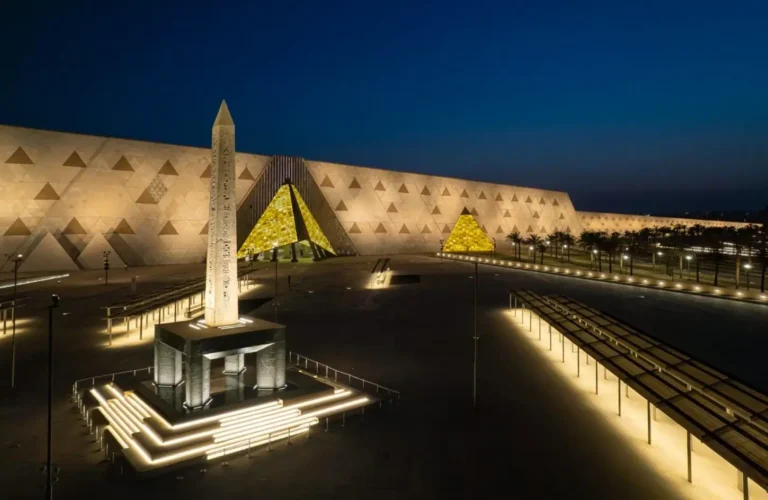
- Cairo and Giza: the pyramids at Giza are on UNESCO’s list as part of Memphis and its Necropolis, a stretch of cemeteries from Abu Rawash to Dahshur that also includes Saqqara and Mit Rahina (Ministry of Tourism and Antiquities). Add the Grand Egyptian Museum, which opened officially on 1 November 2025 (UNESCO). A separate plan sets this out hour by hour for three days.
- Luxor: Karnak and Luxor Temple on the east bank, the Valley of the Kings and Hatshepsut’s temple on the west bank. Both banks are part of Ancient Thebes with its Necropolis, which UNESCO lists with a date of inscription of 1979 and describes as two temples, Karnak and Luxor, on the east bank and a large archaeological area on the west bank.
- Aswan: Philae, the Nubian monuments, and the day trip to Abu Simbel, which lies about 230 km southwest of Aswan, or about 300 km by road (Wikipedia, a secondary source).
Which season is best for a first visit?
Winter is the comfortable season in the south. The World Meteorological Organization’s World Weather Information Service publishes Egyptian Meteorological Authority averages for 1981 to 2010. Its Luxor table shows mean daytime highs of 23.0 degrees Celsius in January, 29.0 in November and 24.3 in December, against 41.3 in June, 41.4 in July and 41.0 in August. Experience Egypt puts typical winter days at about 20 degrees and summer at about 30, hotter in the deserts and the south.
The CDC Yellow Book says desert summer temperatures exceed 38 degrees and that thirst is a late sign of dehydration. If you must travel in summer, start sightseeing when sites open. Valley of the Kings, Karnak and Hatshepsut’s temple all open at 6:00 according to the Ministry of Tourism and Antiquities, so you can finish before midday. Our best time to visit Egypt guide goes month by month.
How do you travel between cities?
You have three choices: fly, take the sleeper train or go by road. The table sums up the published figures. Treat the times as estimates, since schedules change.
| Route | Mode | Time | Notes |
|---|---|---|---|
| Cairo to Luxor or Aswan | Flight | Most domestic flights are about an hour (Experience Egypt) | Seat61 says a flight takes four daytime hours out of your schedule once check-in and transfers are counted |
| Cairo to Luxor | Sleeper train | About 10 hours | Evening departure from Cairo Upper Egypt (Bashtil) station or Giza, arrival between about 5:35 and 9:00 (Seat61) |
| Cairo to Aswan | Sleeper train | About 13 to 14 hours | Arrival between about 8:35 and 12:00 (Seat61) |
| Luxor to Aswan | Car or Nile cruise | A driving day if you stop at Esna, Edfu and Kom Ombo | We give no distance or time, because no official source we opened publishes one |
The sleeper train saves a hotel night. Seat61 says Abela Trains has run the service since 2023 and that it leaves from Cairo Upper Egypt station (Bashtil), with Giza as a second boarding point, not from Ramses. Its timetable lists a daily train that leaves Cairo at 19:45 and reaches Luxor at 06:10 and Aswan at 09:25, while other trains leave between 19:20 and 22:36. Seat61 adds that foreign travellers pay in US dollars or euros, and that booking opens four to five months ahead. Experience Egypt says sleeper cars have two-bed cabins. Seat61 quotes one traveller whose train left 30 minutes late and arrived nearly 2 hours late in Luxor, so allow for delays. Timetables and fares change and we found no official fare table, so confirm both with Abela Trains before you book.
The road between Luxor and Aswan passes Esna, Edfu and Kom Ombo, and a day that stops at all three is a full day, not a transfer. A Nile cruise covers the same stretch by water, which we compare in our Nile cruise versus land tour guide.
What does a sensible first week look like?
Seven days works if each night has a purpose. The table below uses opening hours from the Ministry of Tourism and Antiquities, checked on 29 October 2026, to show how the days fit around the sites.
| Day | Base | Main sites | Opening hours to plan around |
|---|---|---|---|
| 1 and 2 | Cairo | Giza Plateau, then the Grand Egyptian Museum on the second morning | Giza area 8:00 to 16:00 |
| 3 | Luxor | Fly south, then Karnak in the afternoon | Karnak 6:00 to 17:00 |
| 4 | Luxor | Valley of the Kings and Hatshepsut’s temple on the west bank | Both open at 6:00 |
| 5 | Aswan | Travel by road, then an easy afternoon on the river | None |
| 6 | Aswan | Philae in the morning, or Abu Simbel as a long day | Philae 7:00 to 16:00; Abu Simbel 6:00 to 17:00 |
| 7 | Cairo | Flight home or a spare day | None |
Notice what the plan leaves out. Saqqara, Alexandria and the Red Sea all need their own day, so they belong in the ten-day version.
How do you handle money, phones and taxis?
Plan to carry cash. Experience Egypt describes Egypt as a cash-based society, even though cards work in major cities and tourist areas. Banknotes come in values from 1 to 200 in the local currency, and the page says commercial bank ATMs also exchange currency around the clock. Exchange offices operate in most big hotels and airports.
For a phone line, Experience Egypt says temporary tourist lines are sold at WE, Orange, Vodafone and Etisalat shops, and that the provider needs a copy of your passport. Most hotels offer free WiFi. English is widely understood in cities and tourist areas.
Taxis must by law have a working meter, according to the same page, so check that it is on when you start. Ride-hailing apps are widely used, especially in Greater Cairo and Alexandria. Self-driving is a different matter: GOV.UK says you need a 1949 international driving permit alongside your home driving document and that driving outside main cities and resorts at night should be avoided. A first trip is easier with a driver arranged in advance.
What health preparation do you need?
Ask a travel clinic about vaccines well before you fly. The CDC’s page for Egypt, last reviewed on 25 August 2026, recommends hepatitis A for unvaccinated travellers and typhoid for most travellers, and asks everyone to keep routine vaccines such as measles, mumps and rubella up to date. GOV.UK suggests checking its health recommendations at least 8 weeks before you travel.
On the ground, the sun does most of the damage. The CDC advises sunscreen of at least SPF 15, protective clothing, and shade between 10 a.m. and 4 p.m., with extra care in summer. For mosquitoes and ticks it advises a repellent with at least 20% DEET.
GOV.UK also warns that some hotel doctors have overcharged for treatment and medicine, and that pharmacies outside hotels often charge less. Call 123 for an ambulance.
What should you pack, and what are the photo rules?
Pack for sun by day and a cooler evening. Experience Egypt recommends light, loose cotton, a light-to-medium jacket or windbreaker for autumn and winter, a scarf or light cardigan, comfortable shoes for archaeological sites, and sunscreen, lip balm, a hat and sunglasses.
Personal, non-commercial photos and videos in public places need no permit, according to the same page. Flash is not allowed indoors in museums or at indoor sites. Professional gear such as lighting umbrellas needs a permit.
What can you skip on a first trip?
Skip anything that adds a hotel change without adding a landmark. A first week does not need a second Cairo museum, a desert camp or a third temple on the Luxor east bank. Those can wait for a return visit, and a calmer pace makes the headline sites easier to enjoy.
Keep readingEgypt trip planning checklist: a timeline from 6 months out to departure dayStart six months before departure with your passport, which must expire at least 6 months after...Is Egypt safe to visit at the moment?
Check the government advice for your country the week you book. GOV.UK was updated on 27 October 2026 and still current on 28 October 2026. It advises against all travel to North Sinai and within 20 km of the Libyan border, and against all but essential travel to parts of South Sinai, eastern Ismailiyah, the Hala’ib Triangle and most of the Western Desert. Cairo is not named in those warnings. Luxor, Aswan, Abu Simbel and the Valley of the Kings are listed as exceptions to the Western Desert advice.
The same page describes the situation in the Middle East as deeply unpredictable, so read the full text and check it again a week before you fly.
What mistakes do first-time visitors make?
- Packing too much into the first two days. Sites are spread out, and Saqqara alone is about 40 km southwest of Cairo (Ministry of Tourism and Antiquities).
- Assuming one ticket covers everything. The Giza area ticket does not include the Great Pyramid, Khafre’s pyramid or Menkaure’s pyramid (Ministry of Tourism and Antiquities).
- Drinking tap water outside an international hotel. The CDC says it is not safe.
- Skipping covered shoulders and legs for churches and mosques (Experience Egypt).
- Paying a visa agent. GOV.UK says agents often charge more than the official fee and you do not need one.
- Arriving without cash. Egypt is still a cash-based society, especially for taxis and small shops (Experience Egypt).
Which first trip does not suit everyone?
Skip a summer first visit if you dislike heat and early starts. The sites above open between 6:00 and 8:00, and Luxor’s daytime highs reach 38 degrees or more from May to September. If you want a beach-only holiday, the Red Sea resorts suit you better than a temple circuit. If you want a ready route with transfers and guides arranged, look at our Egypt tour packages.