

Short answer: Wear light, loose cotton that covers your shoulders and knees, plus a scarf or light cardigan for mosques and churches, where Experience Egypt says shoulders and legs must be covered. Add a hat, sunglasses, sunscreen and comfortable shoes. In winter, bring a light jacket: Luxor averages 5.9 °C at night in January.
Key facts
- Fabric
- Light, loose cotton is "highly recommended" (Experience Egypt)
- Mosques and churches
- Shoulders and legs covered; bring a headscarf
- Sun gear
- Sunscreen, lip balm, hat and sunglasses (Experience Egypt)
- Cairo, January
- Mean daily high 19.0 °C, low 9.7 °C (WMO, 1981 to 2010)
- Luxor, January
- Mean daily high 23.0 °C, low 5.9 °C
- Aswan, July
- Mean daily high 41.4 °C, low 26.2 °C
- Eating in public
- Be discreet between sunrise and sunset in Ramadan (Government of Canada)
What is the basic rule for clothing in Egypt?
Light, loose cotton that covers your arms and legs. Experience Egypt says light, loose cotton clothing is highly recommended and that visitors are expected to cover their arms and legs at certain landmarks. It adds that you should carry a scarf or light cardigan to cover up at sites.
Covered clothing also protects you from the sun. Pack for the temperature range in the table below rather than for the calendar, because the desert south is cold at night in winter and very hot in summer.
Related tripsEgypt safari toursDesert trips of 2 to 8 days with 4x4 vehicles and camps.What should you wear in each season?
Dress in layers in winter and in the lightest covering you have in summer. These are the mean daily highs and lows for 1981 to 2010 (World Meteorological Organization (WMO) World Weather Information Service, with data from the Egyptian Meteorological Authority):
| Place | January high / low | July high / low | What to pack |
|---|---|---|---|
| Cairo | 19.0 / 9.7 °C | 34.8 / 22.9 °C | Jacket and long sleeves in winter; thin cotton in summer |
| Luxor | 23.0 / 5.9 °C | 41.4 / 24.7 °C | Warm layer for early starts; sun hat in every season |
| Aswan | 22.9 / 8.8 °C | 41.4 / 26.2 °C | Same as Luxor; very light clothes in summer |
| Hurghada | 21.7 °C (high only) | 35.1 °C in August (high only) | Swimwear plus a cover-up for town |
Experience Egypt says a light to medium jacket or windbreaker should be enough in fall and winter. It gives summer averages of about 30 °C by day and 23 °C at night, and winter averages of about 20 °C by day and 15 °C at night. Those are national averages, so use the table above for the place you are visiting. Our month-by-month guide explains how each region varies.
What should you wear to mosques and churches?
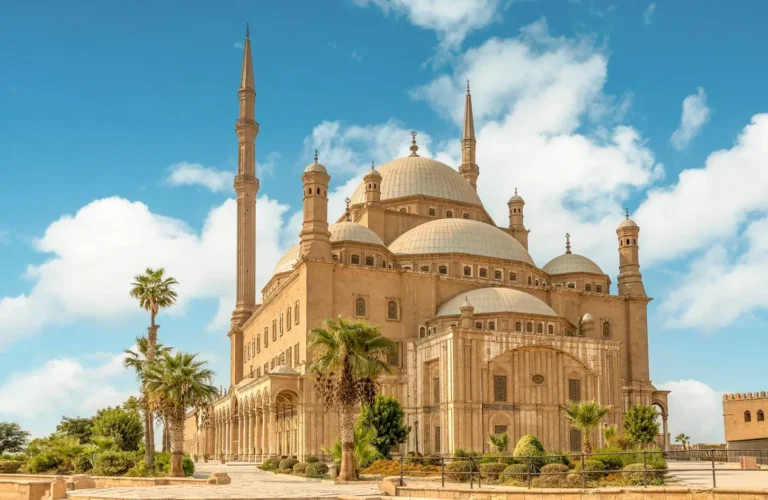
Cover your shoulders and legs and bring a headscarf. Experience Egypt gives this rule for mosques, churches and other places of worship. In practice it means long trousers or a long skirt, and a top with sleeves, for both men and women. A light scarf in your day bag handles the headscarf rule.
The Hanging Church in Old Cairo is open daily 9:00 to 16:00 and the Mosque of Ibn Tulun 9:00 to 17:00 (Ministry of Tourism and Antiquities, checked 28 October 2026), so plan to be dressed for both when you set out in the morning; a guided day through the old city is our Islamic Cairo and Khan el-Khalili private day tour. Shoes usually come off at a mosque, as explained below, so follow the signs and your guide.
What do people in Egypt wear, and what is expected of visitors?
Conservative clothing is the norm outside beach resorts. The Government of Canada says Egypt’s laws and customs closely follow Islamic practices. It advises that for women, knee-length or longer dresses and long sleeves are preferable, and that men should avoid shorts outside tourist areas. It asks travellers to use common sense and discretion in dress and behaviour.
The same page says foreign women are frequently subject to unwanted male attention, and that public displays of affection are frowned upon. In Ramadan, expected to start around 7 February 2027 (Government of Canada), keep food, drink and cigarettes discreet in public from sunrise to sunset. Our customs article covers the wider etiquette.
How do you protect yourself from the sun?
Experience Egypt lists sunscreen, lip balm, a hat and sunglasses for sunny weather. Summer heat is the main risk. Mean daily highs in July reach 41.4 °C in both Luxor and Aswan, so plan to see open-air sites early. The Valley of the Kings opens at 6:00 and Karnak at 6:00 (Ministry), which is when light clothing and a hat matter most.
Evenings cool quickly in the desert in winter. Luxor’s January low is 5.9 °C, so the same early start that avoids summer heat calls for a warm layer in winter.
Which shoes should you take?
Comfortable shoes with a closed toe and a good sole. Experience Egypt says not to forget comfortable shoes for visiting archaeological sites. The Great Pyramid’s King’s Chamber is reached through the Grand Gallery, a corbelled ascending passage (Ministry), so a good grip helps if you go inside. We have not found a source that sets a shoe rule for any site, so this is practical advice, not a regulation.
Sandals or flip-flops are enough for a Nile cruise deck or a beach.
Do you take your shoes off at a mosque?
Yes. Wikivoyage says not to enter a mosque wearing any type of shoes, including sandals, slippers and boots, and that socks may stay on. So wear shoes that come off and on easily, and put clean socks in your day bag.
Wikivoyage also says to avoid walking in front of people who are praying, which it calls a serious taboo. If a prayer is under way, wait or go around.
What do men wear?
Trousers or jeans, or shorts that reach the knee. Wikivoyage recommends pants, jeans or longer shorts, and says only tourists wear short shorts. The Government of Canada says men should avoid shorts outside tourist areas.
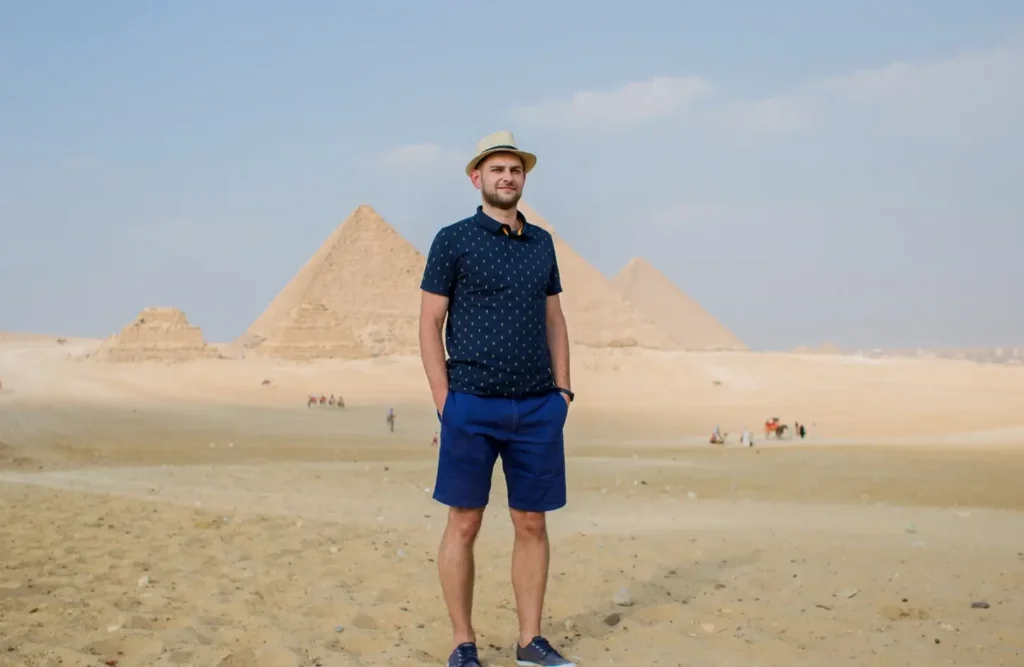
For temples and open sites in summer, a light shirt with short sleeves and thin trousers fits all of those rules. A tank top does not meet the shoulder rule, so keep it for the beach.
What do women travelling alone wear?
Loose clothing that covers arms and legs. The Government of Canada says knee-length or longer dresses and long sleeves are preferable for women. Wikivoyage says women travelling alone should cover their arms and legs, that covering the hair is not required, and that covering up does not reliably prevent harassment: Egyptian women, even those who wear the full hijab, are often subjected to it. Clothing is therefore not a guarantee.
GOV.UK advises women to take care when travelling alone, especially in taxis at night, and to share the driver’s details and a live location with a friend. The Government of Canada says foreign women are frequently subject to unwanted male attention. These are reasons to choose comfortable, unremarkable clothes and to plan your transport, not to avoid the trip.
Do the sources agree on sleeves?
Not completely. Experience Egypt says visitors are expected to cover arms and legs at certain landmarks. Wikivoyage says that at sites like the Giza Pyramids in hot summer months, short-sleeved and sleeveless tops are acceptable for women, especially with tour groups, but suggests carrying a scarf for the journey to and from the site. The UK government says behaviour accepted in tourist resort areas may not be accepted elsewhere.
The safe choice is the one that satisfies all of them: short sleeves at least, a scarf in the bag, and nothing sleeveless in public places away from a resort. Where a rule is posted at a site, the posted rule wins.
What should you wear for what you are doing?
| Activity | Wear | Bring |
|---|---|---|
| Mosque or church | Shoulders and knees covered; long trousers or a long skirt | Scarf or wrap for the hair; socks |
| Pyramids, temples, tombs | Light, loose cotton; closed shoes | Hat, sunglasses, sunscreen, water |
| Nile cruise deck | Light layers; sandals are fine | Warm layer in winter |
| Red Sea resort | Swimwear at the beach and pool | Cover-up for town |
| Smart restaurant or official function | More formal wear, per Wikivoyage and Experience Egypt | A shirt or light dress |
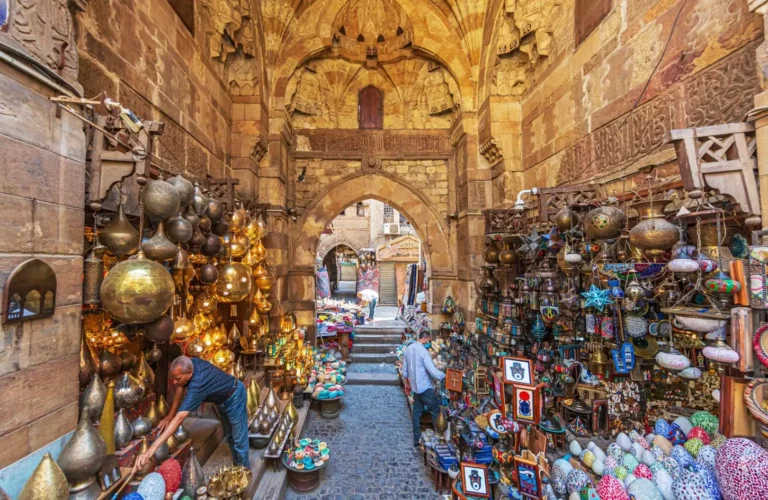
| Cairo streets and markets | Conservative clothing; sturdy walking shoes | Small cross-body bag |
Wikivoyage says sandals in summer are perfectly acceptable for women. Because streets, especially in Cairo, can be uneven, we suggest sturdy walking shoes for city days. That is practical advice, not a rule from any source.
How should you manage sun and heat through the day?
Wikivoyage advises avoiding direct sun from about 9:00 to 15:00, or 10:00 to 16:00 in summer. It says sunscreen becomes less effective once skin sweats, so reapply, and that dry air and high summer temperatures make dehydration common. Thirst alone is not a reliable warning sign, so carry water and keep drinking. The CDC says the same about thirst.
This fits the opening hours of the big sites. The Valley of the Kings and Karnak open at 6:00 and the Giza Plateau at 8:00, so the morning cover is a hat and light sleeves, and by noon you should be somewhere shaded.
What can you leave at home?
Heavy fabrics and tight clothing. You also do not need formal clothes except for a smart dinner. The sources give no rule that requires dressing up for sightseeing, and Experience Egypt asks only that you dress up for fine dining and special events.
What are the common clothing mistakes?
- Wearing sleeveless tops and short shorts away from the beach.
- Leaving the scarf in the hotel room.
- Wearing shoes that are hard to remove at a mosque.
- Choosing new shoes for a day of walking on uneven streets.
- Skipping a warm layer for the early start in winter.
- Overpacking heavy fabrics for a summer trip to the south.
How does a wardrobe fit a trip?
Pack for the coldest start and the hottest afternoon of your route, using the table of highs and lows above. Pick pieces that layer and that satisfy the shoulder-and-knee rule so the same clothes work at a temple, a church and a restaurant. Keep a small scarf on top of the bag every day.
Keep readingEgypt desert regions: permits, seasons and safety rules for oases, White Desert, Siwa, Fayoum and SinaiEgypt has desert trips in the Western Desert oases, in Fayoum, in South Sinai and in...What do you wear on the Red Sea coast?
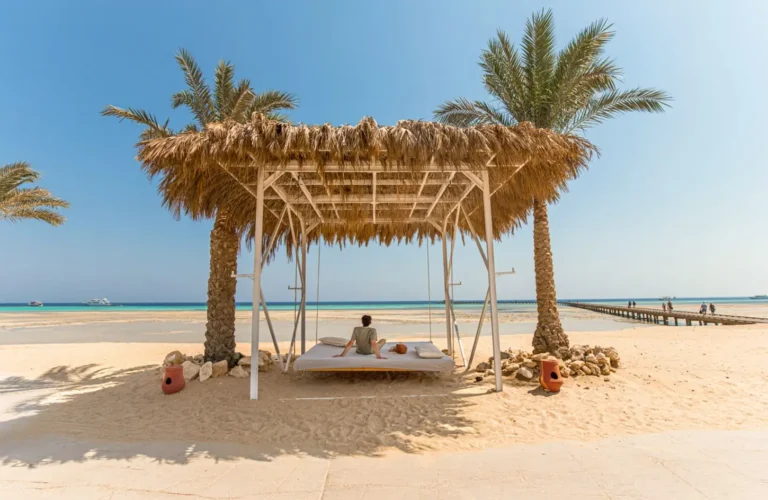
Resort clothing is lighter, but the same cover-up rules apply when you leave the beach for town. Hurghada’s mean daily high is 21.7 °C in January and 35.1 °C in August according to the WMO, and the sea averages 22 °C in January and 28 °C in August (Wikipedia, because the WMO page has no sea data). In winter you will want a layer on the sand, even when the water is swimmable.
What changes at museums and in the evening?
Bag size matters at the Grand Egyptian Museum. Its official ticket site says bags, backpacks and parcels larger than 40 by 40 cm must be stored in the cloakroom, and umbrellas must be left in designated areas. A small cross-body bag is easier than a daypack.
Experience Egypt says to dress up for fine dining or special events. A light layer and a smart top are enough for most evenings, and a cover for your shoulders is useful if the evening ends at a mosque or church.
What else belongs in the bag?
- A scarf or shawl that works as a headscarf and a shoulder cover.
- A light jacket or windbreaker for fall and winter.
- Swimwear if the plan includes the Red Sea.
- Small notes of cash for taxis and small shops, as Experience Egypt advises.
For more packing help, read our Egypt travel tips.