

Short answer: Egypt in summer means July highs of about 41°C in Luxor and Aswan, 35°C in Cairo and 30°C in Alexandria. Sightsee in the first hours after opening (6:00 at Luxor sites), rest at midday, and spend afternoons on the Red Sea or Mediterranean coast. Drink water often and keep out of direct sun from about 10:00 to 16:00.
Key facts
- July mean daily high
- Luxor 41.4°C, Aswan 41.4°C, Cairo 34.8°C, Alexandria 29.9°C
- July mean daily high on the Red Sea
- Hurghada 35.0°C, Sharm el-Sheikh 37.9°C
- Highest temperature on record at Aswan
- 51.0°C, in July
- August sea temperature
- Alexandria 26°C, Hurghada about 28°C
- Karnak and Valley of the Kings hours
- 6:00 to 17:00 every day (Ministry pages, checked 28 October 2026)
- CDC advice on shade
- seek shade between 10 a.m. and 4 p.m.
- Alexandria rainfall, June to August
- 0.0 mm in the WMO 1981 to 2010 averages
How hot is Egypt in summer?
It depends on the region more than the month. The Nile Valley south of Cairo is the hottest, the Mediterranean coast the mildest, and the Red Sea sits between them. The table uses July 1981 to 2010 averages from the World Meteorological Organization (WMO) World Weather Information Service, with data from the Egyptian Meteorological Authority. Siwa and Marsa Matruh are not on the WMO list, so their figures come from Wikipedia, which cites NOAA 1991 to 2020 normals.
| City | July mean daily high | July mean daily low |
|---|---|---|
| Aswan | 41.4°C | 26.2°C |
| Luxor | 41.4°C | 24.7°C |
| Siwa | 40.2°C | 24.3°C |
| Sharm el-Sheikh | 37.9°C | 27.8°C |
| Hurghada | 35.0°C | 27.1°C |
| Cairo | 34.8°C | 22.9°C |
| Alexandria | 29.9°C | 23.4°C |
| Marsa Matruh | 29.9°C | 22.1°C |
Averages hide the peaks. The Egyptian Meteorological Authority forecast for Saturday 12 July 2025, reported by Egypt Independent, was 43°C in Luxor, 42°C in Aswan, 40°C in Sharm el-Sheikh, 38°C in Hurghada, 35°C in Cairo and 30°C in Alexandria. The record high for Aswan is 51.0°C, set in July (Wikipedia, citing Meteo Climat).
Rain is not a factor. Cairo and Alexandria average no rain from June to August.
Nights differ as much as days. The Red Sea does not cool down: Hurghada and Sharm el-Sheikh have July lows of 27.1°C and 27.8°C. Siwa, in the Western Desert, reaches 40.2°C by day but drops to 24.3°C at night. For other months, see when to visit Egypt.
Related tripsEgypt tour packagesTrips with Red Sea beach days at the end.How do sightseeing hours change in summer?
The main change is that you do the outdoor sites right at opening. The Ministry of Tourism and Antiquities pages, checked on 28 October 2026, list Karnak, the Valley of the Kings, the Temple of Hatshepsut and Abu Simbel from 6:00 to 17:00. They list the Great Pyramid from 7:00 to 17:00 and the Giza Plateau from 8:00 to 16:00.
The pages show the same hours for every day of the week and no separate summer and winter hours. Check the hours on the day, because they can change.
A workable pattern for Luxor or Aswan:
- Be at the gate at opening, around 6:00.
- Finish the outdoor temples and tombs by about 10:00.
- Return to the hotel or ship for lunch, a swim and a rest.
- Go out again late in the day. The Ministry pages list Luxor Temple until 20:00 and Kom Ombo until 21:00.
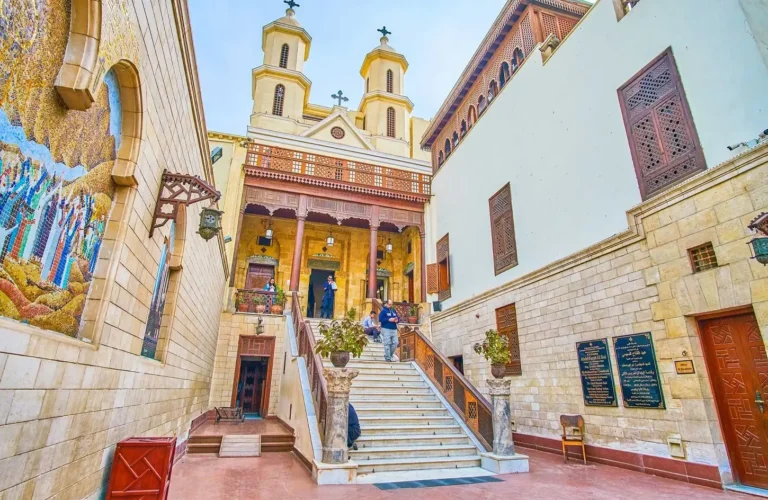
In Cairo, put indoor stops in the afternoon. The Ministry page lists the Egyptian Museum from 9:00 to 17:00 and the Hanging Church in Old Cairo from 9:00 to 16:00, so both fit an afternoon indoors. The Grand Egyptian Museum ticketing page lists its galleries from 9:00 to 18:00 on most days and to 21:00 on Wednesday and Saturday.
What is the Red Sea like in summer?
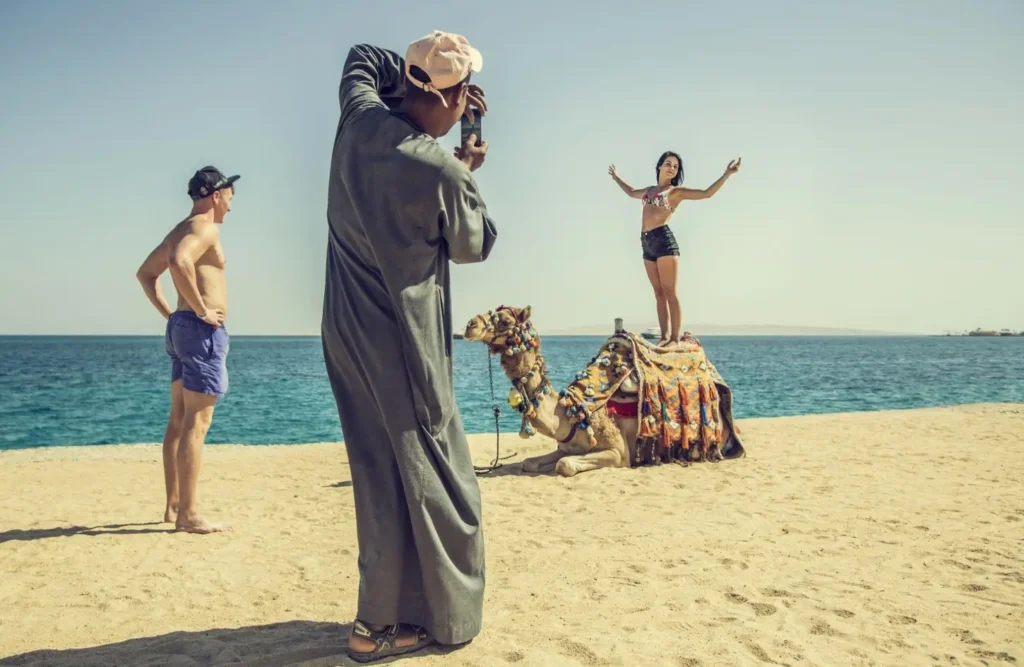
Hot on land and warm in the water. Hurghada averages 35.0°C in July and Sharm el-Sheikh 37.9°C. Sea temperatures peak in August: about 28°C at Hurghada and 28.8°C at Sharm el-Sheikh (figures quoted on Wikipedia’s Hurghada and Sharm el-Sheikh pages).
Nights are also warm, with July lows near 27 to 28°C. If you dislike heat, a Red Sea summer is best spent in the water and in air conditioning, with sightseeing kept to one early excursion.
What about Alexandria and the North Coast?
The Mediterranean coast is the coolest part of Egypt in summer. Alexandria averages 29.9°C in July and 30.4°C in August, with sea temperatures of 25°C in July and 26°C in August. Marsa Matruh is similar, at 29.9°C in July and 30.5°C in August, with the sea at 26°C in August.
That makes the coast the practical choice when Upper Egypt is at 41°C. Alexandria’s sites also keep sensible hours: the Ministry page lists Qaitbay Fort from 9:00 to 20:00.
Summer public holidays can fill the coast with Egyptian families. Wikipedia’s list of Egyptian public holidays gives 30 June and 23 July as fixed national holidays, and says the Islamic holidays move with the lunar calendar, so recheck their dates for your year.
How do you stay safe in the heat?
Heat illness is the main risk. The US CDC warns that heat-related illness such as heat stroke can be deadly. Its advice for Egypt:
- Keep eating and drinking regularly.
- Wear loose, lightweight clothing and limit hard activity in the heat.
- If you are out for many hours, eat salty snacks and drink water to replace the salt you sweat out.
- Use sunscreen of at least SPF 15, wear protective clothing and seek shade from 10 a.m. to 4 p.m.
The Egyptian Meteorological Authority adds two points in its heatwave advice: avoid direct sun, especially around noon, and wear a head covering. The WMO figures show no rain from June to August in Cairo, Luxor, Aswan or Alexandria.
Use bottled or disinfected water for drinking and avoid ice where water quality is a concern (CDC). Sealed carbonated drinks are generally safe. Carry water into the West Bank valleys: Wikivoyage notes there are no water vendors in the Western Valley of the Kings.
If someone feels dizzy, confused or stops sweating, get them into shade and air conditioning and seek medical help.
Is dry heat easier than humid heat?
The numbers differ more than the thermometer suggests. Wikipedia’s climate tables give Luxor a July average humidity of 30% and Alexandria 71%. Luxor’s July high of 41.4°C is dry heat, and Alexandria’s 29.9°C is damp, with a dew point of 20.1°C.
| Luxor | Alexandria | |
|---|---|---|
| July mean daily high | 41.4°C | 29.9°C |
| July average humidity | 30% | 71% |
| July sunshine hours | 383.7 | 362.2 |
| Record high in July | 47.8°C | 40.7°C |
Which feels worse depends on you. Both places are bright, with sunshine hours above 360 in July.
When does the heat ease?
Slowly, and later than most people expect. Luxor’s mean daily highs fall to 39.3°C in September and 35.3°C in October, with lows of 22.2°C and 18.4°C, and humidity rises only to 37% and 43%. Alexandria’s sea is still 26°C in September. If you can choose, late September on the coast and October in the south ask less of you than July does, though the south is still hot in the afternoon.
How do you build a summer trip around the heat?
- Pick the base by climate first: the coast if you want the hours between noon and 16:00 to be easy.
- Put one sightseeing day in the south, starting at the 6:00 opening.
- Plan the afternoon indoors or in the water, not on the road.
- Keep a buffer day. A hot day can end your plans early, and a rest costs less than heat illness.
What is the North Coast like in summer?
Ahram Online, in a 2014 piece, defines the North Coast as the strip from Al-Dekheila to Sidi Abdel-Rahman, with Marsa Matruh beyond it. It describes Matruh’s beaches as quiet with clear water and white sand, and names Rommel, Cleopatra and Agiba beaches. It says locals go for a week or two every summer. That article is old, so read it for geography, not for current conditions.
Summer holidays fill the coast with Egyptian families, and the Government of Canada says harassment risks for women rise on public holidays. Choose dates away from the holidays listed above if you want quieter sand.
What should you know about the sea and the sun?
The CDC says sun exposure is higher in summer and near reflective surfaces such as water and sand. It advises swimming only in designated areas, following lifeguard and warning flags, and wearing shoes on beaches where animal waste may be present. Avoid fresh, unchlorinated water such as rivers and ponds because of the schistosomiasis risk.
Use a repellent with at least 20% DEET against ticks and mosquitoes, with long sleeves and trousers where bites are a concern. Check the CDC page before you travel, because disease advice changes.
What does a summer visit to Abu Simbel involve?
The Ministry of Tourism and Antiquities lists Abu Simbel as open daily from 6:00 to 17:00, so the cooler first hours are yours if you arrive at opening. The page says King Ramesses II had the temple cut into the living rock around 1264 BC, and that the temples were moved in 1968 because the Aswan High Dam threatened to submerge them. A UNESCO-led international effort carried out the move.
The Ministry also says the sun’s rays reach the innermost statues on 22 February and 22 October. Those are winter-side dates, which is one more reason the site is not tied to summer. In July and August, treat it as an early-morning visit followed by a long rest at the hotel, in line with the CDC advice to seek shade between 10 a.m. and 4 p.m.
Can you do a desert trip in summer?
You can, but plan it carefully. Siwa reaches 40.2°C by day in July. The Government of Canada says there is only one petrol station on the 300 km road from Marsa Matruh to Siwa and advises travelling in daylight. The UK says the Western Desert near Bahariya and the White Desert needs advance permits and an official guide, with limited phone reception and poor medical facilities.
What should you pack?
- Sunscreen of at least SPF 15, which is the CDC minimum, plus a head covering.
- Loose, lightweight clothing; see what to wear in Egypt for site rules.
- Sealed bottled water and salty snacks for long outdoor stops.
- Insect repellent with DEET, and shoes for the beach.
- A refillable water bottle and a hat for the queue at the entrance, since the CDC advises regular drinking and shade in the hottest hours.
What are the common summer mistakes?
- Starting a Luxor day at 9:00, not at the 6:00 opening.
- Planning a full day of outdoor sites between 10 a.m. and 4 p.m., the hours the CDC says to seek shade.
- Assuming the sea cools you down. Hurghada and Sharm el-Sheikh nights stay near 27 to 28°C.
- Forgetting that coastal heat is humid and tiring.
What does this guide not cover?
We have no official visitor numbers for summer and no verified hotel or cruise occupancy, so we say nothing on crowds beyond the holiday dates. Climate figures are 30-year averages (1981 to 2010 from the WMO, 1991 to 2020 for Siwa and Marsa Matruh), and single days can run well above the averages, as the record highs in the table show.
Who is summer in Egypt for, and who is it not for?
It suits beach holidays on the Red Sea or Mediterranean, city stays in Cairo and Alexandria with indoor museums, and travellers who can do a 6:00 start and rest at midday.
It is not ideal for long days outdoors in Luxor, Aswan or Abu Simbel, or for anyone who cannot cope with 41°C. Young children, older travellers and people with heart or kidney conditions should ask a doctor first. For a trip that mixes the coast and one early sightseeing day, see the day tours, and for a river option look at the Nile cruises.