

Short answer: Egypt can work for older travellers and many people with limited mobility if you plan around the terrain. The Grand Egyptian Museum has the best documented access, and Karnak has had accessible pathways since 2018. Tombs are long inclined corridors. Travel between November and March, and get every step-free route confirmed in writing.
Key facts
- Best months
- November through March (Wikivoyage); Luxor's mean high is 23.0 °C in January and 41.4 °C in July (WMO)
- Grand Egyptian Museum
- Lifts, escalators, ramps and rest areas announced in 2020; visitors with disabilities enter free (GEM ticketing)
- Karnak
- Wheelchair pathways opened in 2018; the whole temple was not yet accessible then (Egypt Independent)
- Valley of the Kings
- Tombs are long inclined rock-cut corridors; Merenptah's tomb extends 160 m (Wikipedia)
- Heat risk
- WHO lists adults over 65 and people with heart, lung or kidney conditions or diabetes as at greater risk
- Medical care
- Below Canadian standards, and limited outside major cities (Government of Canada)
Is Egypt realistic for older and less mobile travellers?
Yes, with a plan that fits the places rather than a standard itinerary. Many ancient sites predate any accessibility standard, and the ground is often sand, stone and steps. The Ministry has been adding ramps and pathways at the busiest sites, but the work is uneven and dated, so the plan has to be checked site by site.
A word of caution on the evidence. There is no single official access guide for Egypt that we could open. The details below come from two Ministry-related news reports from 2018, a museum announcement from 2020, the museum’s ticket page, Wikipedia and government travel advice. Treat them as a starting point and ask each site and hotel to confirm in writing before you rely on a step-free route.
Related tripsEgypt tour packages63 private trips from 2 to 15 days.Which sites are easiest, and which are hardest?
Museums and the new pathways at Karnak are easier, and tombs and pyramid interiors are the hardest. The table sets out what the sources say. Where we found nothing official, the table says so.
| Place | What the sources say | Fit |
|---|---|---|
| Grand Egyptian Museum | Lifts, escalators, ramps, rest areas in the halls and Braille on explanation cards (Egypt Independent, 2020); about 81,000 square metres of floor area (Wikipedia) | Best documented |
| Karnak | Visitor pathways opened in 2018, with ramps 1.5 m wide planned at the podium area; the whole temple was not yet accessible (Egypt Independent, Ahram Online) | Partial; ask for today’s status |
| Luxor Temple and Luxor Museum | Named with Karnak as the starting points of the Ministry’s 2018 accessibility plan (Ahram Online) | Ask; no current detail found |
| Valley of the Kings | Tombs are long inclined rock-cut corridors; 18 can be opened but they are rarely all open at once (Wikipedia) | Hardest |
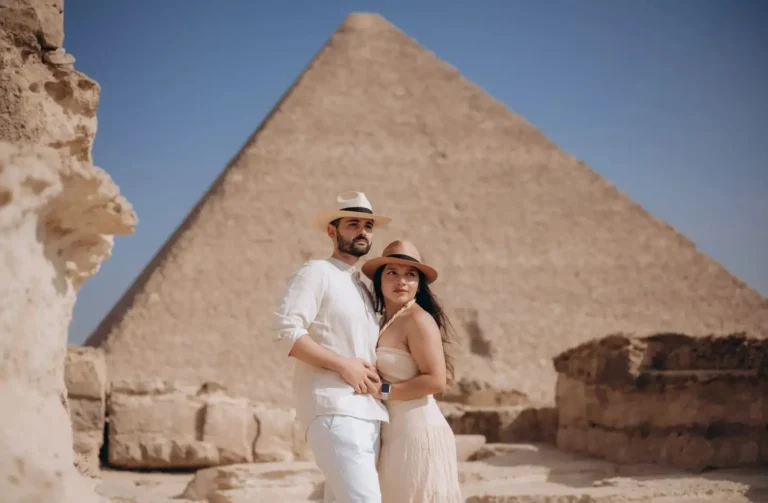
| Great Pyramid | The Ministry describes the Grand Gallery as a corbelled ascending passage and lists an area entry ticket; no access details found | Ask before you plan on it |
| Egyptian Museum, Philae, Abu Simbel | No official access details found in the sources we opened | Ask each site |
Wikipedia adds some scale. The Grand Egyptian Museum is about 2 km from the Giza pyramids, and its Grand Staircase rises six storeys, so the issue is distance as well as steps. At the Valley of the Kings, Merenptah’s tomb extends 160 metres, and the burial chamber of Hatshepsut’s tomb lies 97 metres below the surface.
How good is access at the Grand Egyptian Museum?
Of the major attractions in these sources, it is the best documented, and it is purpose-built. Egypt Independent reported in October 2020 that the museum announced parking and rest spaces equipped for visitors with disabilities, lifts and escalators, wheelchair ramps, rest areas scattered through the exhibition halls, display windows set at a suitable height, Braille on explanation cards and directional speakers at each exhibit.
The museum’s ticket page lists visitors with disabilities among the groups exempt from admission all week. They pay only the difference for a guided tour, and a valid ID is needed to confirm eligibility. The page does not say whether wheelchairs are lent at the entrance, so ask before the day. Because the building is large, plan breaks and a vehicle drop-off at the entrance, and book a morning slot.
What has changed at Karnak and Luxor?
Ahram Online reported on 29 January 2018 that the Ministry would build special paths at Karnak and Luxor for wheelchairs, starting with Karnak, Luxor Temple and the Luxor Museum. It named ramps 1.5 metres wide at Karnak’s podium area and between the Taharqa column and the open-air museum, a wooden slope from the start of the Avenue of Sphinxes, information boards for visitors with impaired sight and hearing, a visitor-centre film with sign language, and renovated toilets.
Egypt Independent reported on 21 April 2018 that the first visitor pathways at Karnak were inaugurated, in a project with Vodafone Egypt and the NGO Helm. It said the entire temple was not yet accessible and that a southern axis from the seventh to the tenth pylon was still under construction. Both reports are old. Ask your planner what is open at Karnak on your date.
Is a Nile cruise or a land tour better?
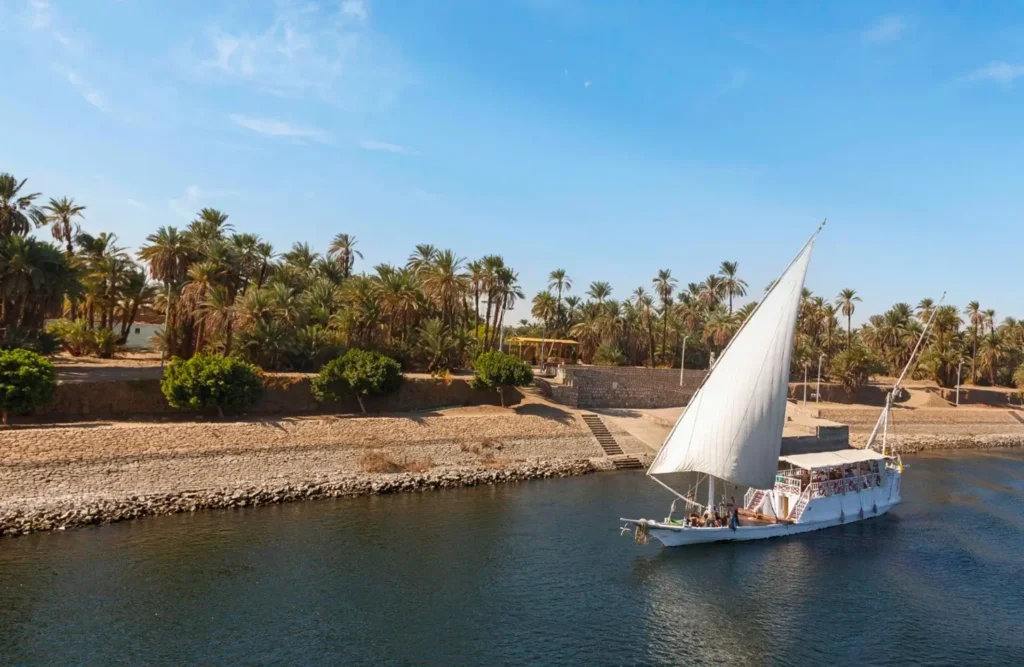
A cruise suits many older travellers because you unpack once, but boarding and cabin layout decide whether it works for a wheelchair. The sources we opened give no accessibility standard for Nile ships, so the table lists the questions to ask.
| Point | Nile cruise | Land tour with hotels |
|---|---|---|
| Unpacking | Once, per sailing | At each hotel change |
| Steps and boarding | Ask about the gangway slope and the lift routes between decks | Hotel lifts and entrances vary by property |
| Cabins and rooms | Ask for the cabin and bathroom door widths | Ask for the same, and the bed height |
| Site access | Same site limits as on land | Same site limits as on a cruise |
| Risk | A lift alone does not guarantee a step-free route to your cabin | More driving days; check vehicle size |
Ask the cruise contact for the door widths, the gangway slope and the lift routes before you commit, and ask what happens if boarding looks unsafe on the day. Our guide to Nile cruise versus land tour compares the two in detail.
How much walking should you expect?
More than you think, even at sites with a vehicle drop-off. Wikipedia says the main Valley of the Kings sees an average of 4,000 to 5,000 visitors on most days, and that visitors are expected to move quietly and in single file to protect the decoration. A queue in a narrow tomb is slow, and a site that suits an average walker in an hour may need much longer.
It also helps to separate stairs from distance. Some travellers can climb a few steps and cannot walk 800 metres, and others are the opposite. Say which applies to you, because a planner can only reduce the one you name. Ask for the longest continuous walk and the number of steps at each stop.
How should you set the pace?
One main site per morning, a rest after lunch and a short, flat outing at the end of the day. Karnak and the Valley of the Kings both open at 6:00, and the Giza Plateau opens at 8:00 (Ministry), so the cooler hours are there to be used.
- Choose the single must-see item for each day.
- Keep it in the cooler hours, before late morning.
- Book museums for the middle of the day, when the outside is hottest.
- Leave the afternoon free for rest or a flat stop.
- Add a spare day to the route for fatigue or a bad stomach.
Seated rest points matter. The Grand Egyptian Museum announced rest areas in its halls in 2020. The sources do not promise benches at the temples, so ask your guide where the shaded rest points are.
What can you do instead of a steep tomb?
Choose the viewpoint and the museum version. Wikipedia says only 18 tombs at the Valley of the Kings can be opened and that they are rarely open at the same time, so the choice is often made for you. Seeing the valley and the setting is still a worthwhile stop, and the Grand Egyptian Museum shows the objects without the corridor.
The Ministry’s Luxor Museum was named in the 2018 accessibility plan, so it is worth asking about as an indoor stop in Luxor. We found no official page on restored tombs with ramps, so if a guide offers one, ask for the day’s status in writing. The same approach works at the pyramids: ask which parts of the plateau you can reach by vehicle, and skip the interior unless the Ministry confirms access.
How much does the heat matter?
A great deal. The World Meteorological Organization’s World Weather Information Service shows Luxor with a mean daily high of 41.4 °C in July but 23.0 °C in January and 25.1 °C in February (1981 to 2010, with data from the Egyptian Meteorological Authority). Wikivoyage calls November through March the most comfortable months for travel in Egypt, which fits the numbers.
WHO lists older adults, especially those over 65, and people with heart, lung or kidney conditions, diabetes or disabilities among those at greater risk from heat. The NHS says to avoid the sun between 11am and 3pm and to check on older adults and people with long-term conditions. Our health guide has the signs of heat exhaustion and heatstroke.
How do you get around between cities?
Plan a private vehicle in each city and a flight between cities, and ask about each leg. We found no official source on wheelchair-accessible vehicles, public buses, Cairo Metro lifts or wheelchair assistance at airports, so none of those can be assumed.
Give the exact chair size and weight when you ask for a vehicle, and ask whether it has a ramp or a lift. Standard tourist vans may not fit a large powered chair. For flights, contact the airline in advance about its wheelchair procedures. For trains, confirm station and carriage access before you plan a rail leg.
What about hotels and bathrooms?
A label does not guarantee a usable bathroom. We found no official accessibility grading for Egyptian hotels, so ask for door widths, shower type, bed height and the route from room to restaurant. Accessible room availability can vary by date, so book early and ask for confirmation by email.
In Aswan, some hotels sit on islands in the river and need a boat transfer. Ask whether the landing is step-free and what the transfer involves for a wheelchair or walker.
Keep readingWhen to visit Egypt: month by month for Cairo, Luxor, the Red Sea and AlexandriaOctober to April suits Cairo, Giza, Luxor and Aswan, when average daytime highs run from about...What about medical care and medicines?
Plan on limited care outside the big cities and sort your medicines before you leave. The Government of Canada says medical facilities are below Canadian standards. GOV.UK says to call 123 and ask for an ambulance, and the Canadian page lists 113 as the medical assistance number.
GOV.UK says some hotel doctors have overcharged for treatment and medicines, and that pharmacies outside hotels often sell medication more cheaply. It also says the FCDO publishes a list of medical providers in Egypt, and that some staff at these facilities speak English. Save the list on your phone before you travel.
Bring enough medicine for the whole trip. GOV.UK says some prescription and over-the-counter medicines are controlled substances in Egypt, that you may need permission from the Ministry of Health before arriving, and that you should carry a GP letter stating your condition, the amount you carry and that it is for personal use. Without the right documents you may not be allowed to bring the medication in.
For long days outside, the CDC advises eating and drinking regularly, wearing loose and lightweight clothing and limiting physical activity in high temperatures. It adds that if you are out for many hours in the heat, salty snacks and water replace the salt you lose through sweating. For sun, it suggests sunscreen of at least SPF 15, protective clothing and shade during the hottest hours, 10 a.m. to 4 p.m.
What should you ask before booking?
Ask for answers in writing, site by site. Use this checklist when you speak to any planner.
- How many steps and how long a walk does each stop involve?
- Is the vehicle sized for my chair, and does it have a ramp or lift?
- What are the cabin and bathroom door widths on the ship or hotel?
- Where can I sit or rest, and where are the toilets?
- What is the plan if I tire, or if the weather is hot?
- Who is the person to call, and in which language?
Travellers who cannot manage uneven ground, any steps or long days may prefer a shorter city stay to a long route, or a cruise with confirmed lifts. See the options on our Egypt tour packages page, or send your needs through the trip planning form.
What could not be confirmed?
We could not confirm the current state of the Karnak and Luxor pathways, wheelchair loans at the Grand Egyptian Museum, access inside the pyramids, lifts at the Egyptian Museum, boat access at Philae, or the accessibility of any vehicle, ship or hotel. Each of those is a question for the site or your planner, in writing, before you rely on it.