

Short answer: A Nile cruise day is shaped by temple opening hours: Karnak and the Valley of the Kings open at 6:00, Edfu closes at 17:00 and Kom Ombo stays open until 21:00. Expect an early start, a rest in the heat, and time on board for meals. Drinks and tips are extra on our sailings.
Key facts
- Early starts
- Karnak, the Valley of the Kings and the Temple of Hatshepsut open at 6:00 (Ministry of Tourism and Antiquities, checked 29 October 2026)
- Evening visits
- Luxor Temple stays open until 20:00 and Kom Ombo until 21:00 (Ministry)
- Early closing
- Philae closes at 16:00 and Edfu at 17:00 (Ministry)
- Esna lock
- On the west bank (Ministry of Tourism and Antiquities), about 55 km south of Luxor; ships can be held up for hours (Wikipedia, secondary)
- Check-in and check-out
- From 12:00 and at 8:00 on our sailing pattern (rate sheet)
- Extras
- Sightseeing is not in the cruise rate; drinks and tips are paid on board (rate sheet)
What does a typical Nile cruise day look like?
The opening hours of the temples decide it. Most mornings begin with breakfast and a visit that starts when a site opens, because Karnak, the Valley of the Kings and the Temple of Hatshepsut open at 6:00 and the heat builds from mid-morning. The rest of the day is a return to the ship, a meal, rest and either sailing or a second visit.
The table sets out the blocks and what fixes each one. We found no allowed source that publishes a fixed clock timetable for a cruise, and every ship adjusts the order, so read the times as limits, not as a schedule.
| Part of the day | What usually happens | What fixes it |
|---|---|---|
| Early morning | Breakfast, then a site visit | Karnak, the Valley of the Kings and Hatshepsut open at 6:00 |
| Late morning | Back on board, or on to a second site | Heat: Luxor’s mean daily high is 41.4 °C in July |
| Lunch and afternoon | Meal on board, rest, sailing or a second visit | Edfu closes at 17:00 and Philae at 16:00 |
| Evening | Dinner on board, or a late visit | Luxor Temple open to 20:00, Kom Ombo to 21:00 |
| Night | Moored or sailing, depending on the ship’s timetable | The sailing pattern for your dates |
Ask the seller for the day-by-day timing of your own sailing before you pay, including the hour the ship reaches each temple.
Related tripsCompare 29 Nile cruise shipsSailing days, cabins and prices for every ship.What happens on the first afternoon?
You board, have lunch and start sightseeing the same day. Our own sailing pattern sets check-in from 12:00, so the first afternoon is shorter than the rest. Karnak closes at 17:00 and Luxor Temple at 20:00 according to the Ministry, which is why an east bank visit on day 1 often falls late in the day and may be Luxor Temple rather than Karnak.
A morning flight into Luxor is the safer choice for anyone who wants the full first visit. A late arrival can mean a short evening visit or none, because Karnak will already be closed.
How early are the mornings?
Early, and this is the trade-off of the format. The Ministry pages give a 6:00 opening for Karnak, the Valley of the Kings and the Temple of Hatshepsut, and Edfu opens at 6:00 or 7:00 depending on the day. A cruise that wants you inside the Valley before the heat has to leave the dock before breakfast has finished.
The WMO World Weather Information Service, which publishes Egyptian Meteorological Authority data for 1981 to 2010, shows why. Luxor has a mean daily maximum of 41.4 °C in July and a mean daily minimum of 24.7 °C, and Aswan’s mean maximum is also 41.4 °C. In January the mean maximum is 23.0 °C and the minimum is 5.9 °C in Luxor, so a dawn start is cold on the sun deck and warm in the tombs by mid-morning.
A cruise suits you if you like to sleep early and start early. It does not suit someone who wants a lie-in and a long breakfast on most days.
How do meals work on a full-board cruise?
Breakfast, lunch and dinner are on board, and drinks are paid for separately. Our rate sheet says the rates are per person per night with full board, and that drinks, tips and other extras are paid on board, while sightseeing is not part of the cruise rate. Meal times differ by ship and by the day’s programme, so ask reception for the next day’s schedule on the evening before.
The US CDC Yellow Book says thoroughly cooked meat and vegetables are generally safe in tourist hotels, on Nile cruise ships and in tourist restaurants. It advises bottled water for drinking, since tap water is generally unsafe outside large international hotels, and calls the safety of uncooked vegetables and salads questionable. For a cruise, that suggests eating from the hot dishes first and keeping to bottled water.
The CDC also says norovirus outbreaks are not uncommon on cruise ships and that good hand hygiene helps. Wash your hands on returning from each visit, before you sit down to lunch.
When does the ship actually sail?
We found no allowed source that publishes sailing hours, and ships differ, so we do not give a pattern. What is fixed is the geography. The Ministry of Tourism and Antiquities places Esna and Edfu on the west bank of the Nile and says Edfu and Kom Ombo lie a short distance north of Aswan, while Wikipedia puts Esna about 55 km south of Luxor. The ship has to cover those gaps between the visits, and the sailing falls into the hours when no temple is open or the group is resting.
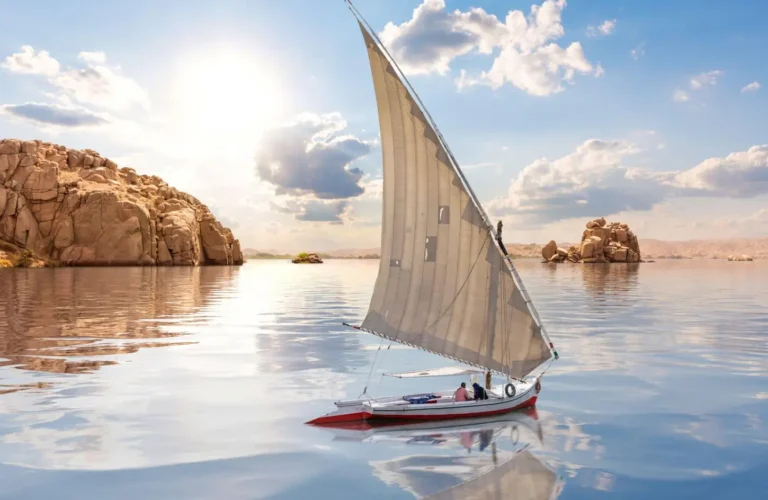
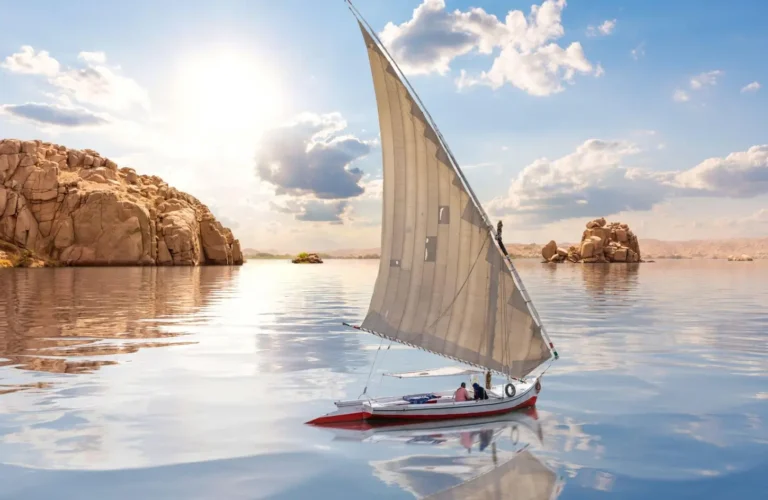
Wikipedia describes modern Nile cruise ships as larger vessels that function as floating hotels, so the cabin, meals and sun deck stay with you whether the ship is moored or moving. Two days on the river can look quite different: on a temple day the ship is a base, and on a long sailing day it is the destination.
What happens at the Esna lock?
The ship waits its turn and is lowered or raised, and the wait can be long. Wikipedia’s Esna page says ships, including Nile cruisers, can be held up for hours while they negotiate the lock system at the barrage, and places the town on the west bank some 55 km south of Luxor. We found no official transit time, so ask where the lock falls in the day, because it can push lunch or an excursion later.
Wikipedia’s Nile cruise entry adds that the locks are open from October to mid-April, and that from about mid-April they close to manage water levels, so passengers leave the boat on one side of the lock and transfer to another boat on the other side.
The Temple of Khnum at Esna sits about 200 m from the river and 9 m below street level, and Wikipedia says only the front hall survives and the temple is partly excavated. Whether your programme stops there is a question for the seller.
What do the shore visits add to the day?
Each stop has its own hours and its own pace. The Ministry of Tourism and Antiquities pages, checked on 29 October 2026, give three useful limits for the stops that fall in the middle of the cruise.
| Stop | Hours | Why the hours matter on a cruise day |
|---|---|---|
| Edfu | Closes at 17:00 | A morning visit is the safe case; a late arrival leaves little time |
| Kom Ombo | 7:00 to 21:00 | Can be visited late in the afternoon or early evening, when the ship arrives |
| Philae | 7:00 to 16:00 | Reached from Aswan; a late return from another stop can cost the visit |
The edge cases matter more than the average. A ship that docks at Kom Ombo at dusk lets you walk the temple after the heat. A ship that reaches Philae in the late afternoon may be too late.
At Edfu, Wikivoyage says cruise boats dock at a river wharf on the west bank where horse-carriage drivers wait for passengers going on to the temple. It gives local-currency figures for the drivers’ opening price and a lower target for the whole carriage, but they are from October 2018, so we do not repeat them: ask your ship whether the transfer is included.
What is a full day like from Luxor to Aswan?
A cruise from Luxor spreads the work across the first three days. The list below is our own template, built from the Ministry hours and our 4-night pattern, not a timetable from any ship.
- Day 1: board from 12:00, lunch, then Luxor Temple (open to 20:00) or Karnak (open to 17:00).
- Day 2, morning: the Valley of the Kings and the Temple of Hatshepsut, both open from 6:00, then back to the ship for lunch.
- Day 2, afternoon: the ship sails toward Esna and the lock, where a delay is possible.
- Day 3: Edfu in the morning, a stretch of open river, then Kom Ombo late in the afternoon or early evening.
- Day 4 in Aswan: Philae, which closes at 16:00, and time ashore.
- Day 5: breakfast and check-out at 8:00.
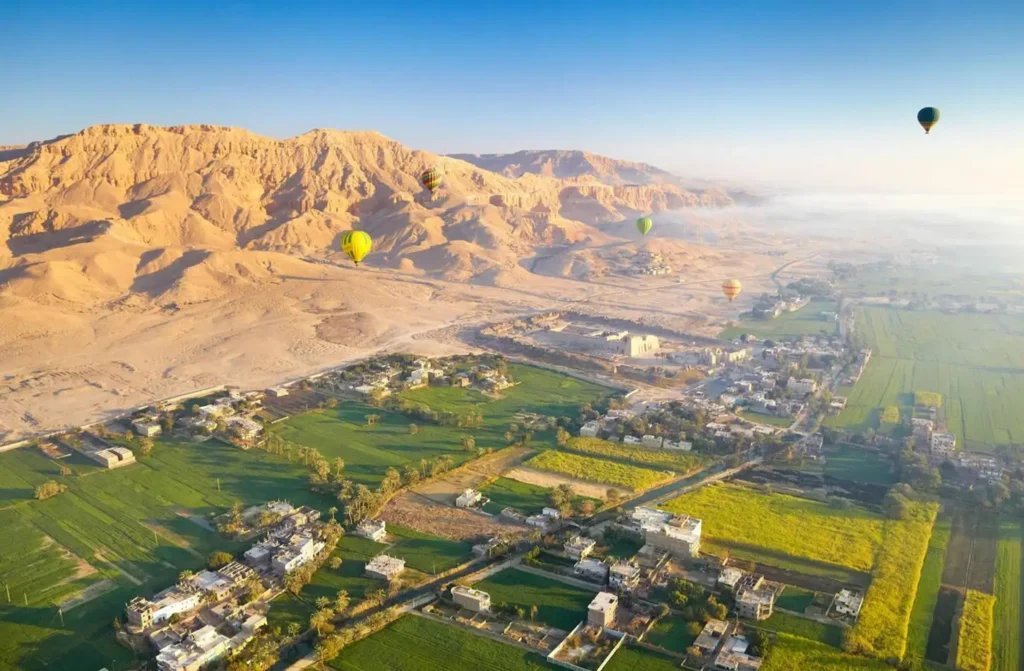
Real timings vary by ship and by date. Optional extras such as a balloon flight or a private guide are paid on top, and our rate sheet says sightseeing is outside the cruise rate.
What happens in the evening?
Dinner comes first, then either a quiet evening on deck or, on some nights, a late visit. Luxor Temple stays open until 20:00 and Kom Ombo until 21:00, which gives you a second look at the same landscape after dark if the programme allows it.
We found no allowed source on the onboard programme, such as music or themed evenings, so we do not describe one. Ask which nights your ship has an event, and whether any evening entertainment is included or paid on board.
How does the season change the day?
The season changes the heat and the daylight more than the route. The WMO World Weather Information Service gives these 1981 to 2010 mean daily maximums and minimums in degrees Celsius for Luxor and Aswan.
| Month | Luxor high / low | Aswan high / low |
|---|---|---|
| October | 35.3 / 18.4 | 35.7 / 20.8 |
| November | 29.0 / 12.3 | 29.0 / 15.6 |
| January | 23.0 / 5.9 | 22.9 / 8.8 |
| February | 25.1 / 7.8 | 24.8 / 11.0 |
| March | 29.5 / 11.8 | 29.4 / 14.9 |
| April | 35.3 / 16.9 | 35.2 / 19.9 |
In the warm months the sun deck is a morning and evening space, and midday belongs to the cabin or the lounge. In January a jacket on deck at 6:00 is not optional. Wikipedia says the preferred cruising season is October to February, when temperatures are more tolerable.
Keep readingNile cruise cabin types explained: standard, superior, suite and sun deckCabin names on Nile ships are not standardised: a standard, superior or suite cabin can differ...What should you bring for a day like this?
Bring layers, sun protection and a bag that fits a quick change of plan. The CDC says to wear a hat, sunglasses and lightweight loose clothing and to use sunscreen. It says thirst is a late sign of dehydration, and that sweat evaporates quickly in dry air, so dehydration can go unnoticed.
- A warm layer for dawn in winter, when Luxor’s January low averages 7.1 °C.
- A hat and a water bottle for every visit, since the CDC says to drink regularly.
- Shoes you can walk in on uneven temple floors.
- Small cash for tips and optional extras paid on board or at the site.
What does the last morning look like?
It is the shortest day of the cruise, because check-out is early. On our sailing pattern check-out is at 8:00, and late check-out is possible on request, with a charge. Breakfast, cabin check-out and the transfer to the airport, station or hotel all fit inside that early window.
Plan any flight with that in mind. A departure at midday leaves a gap between leaving the ship and reaching the airport, and a departure at 7:00 is not realistic from a ship that clears cabins at 8:00. Ask where luggage can wait if you have hours to spare before a later flight or train.
Who does the cruise rhythm suit, and who should think twice?
It suits travellers who like a structure and do not want to pack and unpack. You unpack once, the hotel moves, and the temples come to you. It suits families with children old enough for a 6:00 start, and couples who want a slow afternoon after a busy morning.
It is harder for travellers who dislike early starts, who want free time at each site, or who need a long, flexible lunch. If that describes you, a land tour with a private guide may fit better. Our guide to the two cruise directions shows how the nights are split, and our Nile cruises page shows the ships and sailing days. A ready route is the 7-day Cairo and Nile cruise by flight, and the trip planning form takes your dates.